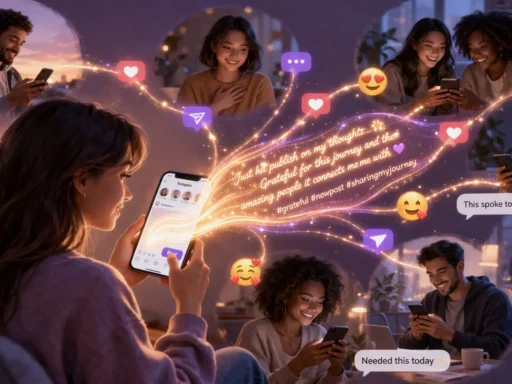


Picture two Instagram posts side by side. The first is a stunning travel photo with a single caption: “Lost. And glad about it.” Three words. Thousands of likes. The second is a personal post from a small creator — a simple selfie accompanied by four paragraphs about a year of silent struggle and the moment everything changed. Hundreds of comments. Hundreds of saves.
Both went viral in their own way. Both captions worked. And that is exactly the problem with asking which caption length performs better on Instagram – because the honest answer is that it entirely depends on what you are posting, who you are posting for, and what you want your audience to do next.
This article breaks down both styles clearly, compares them across every major engagement metric, and gives you a practical framework for knowing exactly which one to use, and when.
Understanding Caption Length on Instagram
Instagram allows captions of up to 2,200 characters per post — roughly 300 to 400 words. In practice, creators use this space in wildly different ways. Some never go beyond ten words. Others write mini-essays that take two full minutes to read.
For clarity, here is how most creators and marketers define the two main caption categories:
Short captions: Typically under 125 characters — roughly one to two sentences. This is also the point where Instagram’s feed cuts the text and shows the “more” button, meaning short captions are read in full without any extra tap.
Long captions: Anything that requires the reader to tap “more” to read in full. These range from a few sentences to several paragraphs and are increasingly common among personal brands, storytellers, and educational creators.
Neither style is inherently better. What matters is whether the caption serves the content, the audience, and the intent behind the post.
Why Many Creators Prefer Short Captions
Short captions have built-in advantages that make them the go-to choice for a large segment of Instagram creators. Here is why they work so well:
They Are Easy to Read and Quick to Consume
In a feed that moves fast, friction matters. A short caption removes all barriers. The reader does not need to stop, tap, scroll, or invest time. They read it instantly — and that frictionless experience keeps the scroll feeling natural and the engagement feeling effortless.
They Are Visually Clean and Minimal
For aesthetic-first content — fashion, food, architecture, travel — a long caption can feel like visual noise. Short captions let the image breathe. They complement the visual rather than competing with it. Many of Instagram’s most followed aesthetic accounts use captions of five words or fewer for exactly this reason.
They Work Brilliantly for Humor and Relatable Content
Memes, relatable posts, and comedic content almost always perform better with short captions. The punchline needs to land fast. A long setup kills the joke. When the image is the content and the caption is the punchline, brevity is everything.
They Are Ideal for Quotes, One-Liners, and Strong Statements
A well-written single sentence can be more powerful than three paragraphs. Short captions that function as standalone quotes or bold statements are highly shareable. They get screenshotted, reposted, and quoted in other captions — extending their reach far beyond the original post.
When Long Captions Perform Better
Long captions are not for every post — but when they are the right choice, they are dramatically more powerful than a short caption could ever be. Here are the situations where length earns its keep:
Storytelling and Personal Experience Posts
When a creator shares a real experience — a difficult season, a turning point, a lesson learned — the story needs space to unfold. A short caption cannot carry the emotional arc that makes people stop, read, feel, and respond. Long captions built around personal stories consistently generate more comments and saves than any other format because they create genuine human connection.
Educational Content and Practical Tips
Creators who teach — whether that is fitness advice, financial tips, recipe instructions, or marketing strategy — need space to explain. Long captions that deliver real, actionable value are saved at significantly higher rates than short ones, because the audience wants to return to the information later. Saves are one of the strongest engagement signals on the platform.
Brand Storytelling and Marketing Posts
For businesses and brands, long captions are a powerful tool for building trust and communicating values. A caption that tells the origin story of a product, shares the thinking behind a decision, or acknowledges a challenge the brand faced creates the kind of emotional connection that short promotional copy never can. Customers who read a brand’s story become advocates, not just buyers.
Motivational and Reflective Content
Motivational creators who have built large audiences often write their most engaging captions as long-form reflections. These posts reward the time investment with emotional resonance and frequently inspire readers to share the caption with someone else who needs it — which is among the most organic forms of growth available on Instagram.
Engagement Comparison: Short vs Long Captions
The effectiveness of caption length varies by metric. Here is how each type typically performs across Instagram’s key engagement signals:
| Short Captions | Long Captions |
| Likes — Fast, instinctive response. Short captions earn likes easily because the entire post is consumed in under three seconds. | Likes — Earned through emotional investment. Readers who finish a long caption are highly likely to like the post as an expression of connection. |
| Comments — Lower volume on average. Short captions leave less to respond to unless a pointed question is included. | Comments — Higher volume and more depth. Long captions give readers context to respond with their own stories, opinions, and reactions. |
| Shares — Strong for humor, quotes, and widely relatable posts. Short captions that function as standalone statements get shared frequently. | Shares — Strong for storytelling and educational content. Readers share long captions when they want others to experience the same feeling or information. |
| Saves — Low to moderate. Short captions are consumed and forgotten unless the content itself is reference-worthy. | Saves — Highest of any format. Educational long captions and personal stories with clear takeaways are saved at significantly higher rates. |
| Time on post — Brief. Short captions keep the interaction shallow but fast, which suits high-frequency posting strategies. | Time on post — Considerably longer. Each additional second a user spends on a post sends a positive relevance signal to the algorithm. |
Real Caption Examples: Seeing the Difference
Short Caption Example — Travel Photo
✈️ “Found the end of the world. It was worth it.”
This caption works because the image carries the visual story. The caption adds a mood, a perspective, and a touch of personality without getting in the way. It earns likes and potential shares from anyone who relates to the feeling of discovery.
Long Caption Example — Personal Reflection Post
📖 “A year ago today I posted for the first time on this account. I had 11 followers — my sister, two friends, and eight people who I think followed by accident. I almost deleted it after the first month. The posts felt pointless. The silence felt loud. I kept going because I had nothing to lose and nowhere else to put the things I needed to say. Today this account has become something I never planned. Not because I figured out the algorithm. Not because I went viral. But because I kept showing up and writing honestly, even when no one was reading. If you are in that early, quiet season right now — stay with it. The right people always find what they need to find. Who was here from the beginning? 👇“
This caption works because the image (a simple selfie or milestone post) cannot carry this weight alone. The story is the content. The emotional arc — from doubt to persistence to gratitude — gives readers something to feel, respond to, and share.
When You Should Use Short Captions
Use short captions when the visual is the message and the caption’s job is simply to complement or punctuate it. Ideal scenarios include:
- Aesthetic and editorial photography where the image is intended to speak for itself
- Humor, memes, and relatable content where the punchline needs to land instantly
- Travel photos where a mood or single observation is more powerful than an explanation
- Product launches where a bold, confident statement creates more desire than a long description
- Quote graphics or motivational images where the text in the image already carries the message
- Quick personal updates where brevity communicates confidence and authenticity
When You Should Use Long Captions
Use long captions when the image or video needs context to be fully understood, or when the caption itself is the primary reason to engage. Ideal scenarios include:
- Personal storytelling posts where you are sharing an experience with a beginning, middle, and end
- Educational and how-to content where your audience needs specific information to benefit from the post
- Motivational and reflective content where depth and honesty create emotional resonance
- Brand or product stories where you want to build trust and communicate your values beyond the product itself
- Milestone or anniversary posts where the context adds meaning that the image alone cannot provide
- Community-building posts where you want to start a conversation and invite followers to share their own experiences
Common Caption Length Mistakes Creators Make
- Writing long captions without structure. A wall of unbroken text is abandoned before it is finished. Long captions need line breaks, clear progression, and a payoff worth reading toward.
- Adding length without adding value. Padding a caption to seem thorough or serious, without actually saying anything meaningful, trains your audience to stop reading your captions entirely.
- Forcing long captions onto every post. Not every piece of content needs a story. Applying a long caption to an aesthetic photo or a humor post can feel out of place and reduce engagement rather than increase it.
- Writing short captions for posts that need context. A complex educational post or a vulnerable personal story cannot be served well by a single sentence. Undercutting the content with a thin caption leaves the audience without enough to respond to.
- Ignoring the hook. For long captions, the first line — the part visible before the “more” button — determines whether anyone reads the rest. A weak opening means even the best caption goes unread.
- Mismatching tone. A casual, funny caption on a heartfelt post, or a serious long caption on a lighthearted meme, creates cognitive dissonance that reduces engagement across both metrics.
Tips to Find the Right Caption Length for Your Content
1. Match length to content type — Ask yourself what job the caption needs to do. If the image is the message, keep it short. If the caption is the message, give it space.
2. Know your audience’s habits — Check your analytics. Do your longer posts generate more saves and comments? Do your shorter ones drive more shares? Let the data inform the default, not assumption.
3. Experiment deliberately — Run a simple test: post similar content with short and long captions in the same week. Compare engagement patterns. The results will tell you more than any general advice can.
4. Always write the hook first — Regardless of overall length, your opening sentence is the most important. It determines how many people read anything that follows.
5. Use line breaks in long captions — Break every two to three sentences into its own visual block. This makes long captions scannable and dramatically increases the completion rate.
6. Focus on value, not word count — The goal is never to hit a target length. The goal is to say what needs to be said — nothing more, nothing less — and to say it in a way your audience actually wants to read.
7. End with an invitation — Whether your caption is three words or three hundred, always give your audience somewhere to go — a question, a CTA, a prompt that makes engaging feel natural rather than optional.
Summary
Short captions are not better than long captions. Long captions are not better than short captions. The creator who insists on always keeping things brief and the creator who always writes a novel are both making the same mistake: applying one solution to every problem.
The best Instagram creators are fluent in both. They know that a perfectly timed three-word caption on the right image can outperform anything a long caption could do. And they know that a story told honestly across two hundred words can build more connection in a single post than a month of short ones.
Your caption length is not a brand identity. It is a creative choice made in service of the content, the audience, and the moment. Make it deliberately. Test it consistently. Adjust based on what your audience actually responds to, not what the general advice says they should.
The caption that works best is always the one that fits — the one that says exactly what needs to be said, in exactly the amount of space it needs, and that makes your audience feel like it was written specifically for them.

As a SEO Specialist, I help businesses optimize their online presence and reach more customers through search engines. I have been working in this field for over a year, and I have earned certifications from various platforms. I have experience in conducting SEO audits, developing link building strategies, and implementing SEO best practices for various clients across different industries.